The Gold Standard and Bretton Woods: How Modern Currencies Were Born
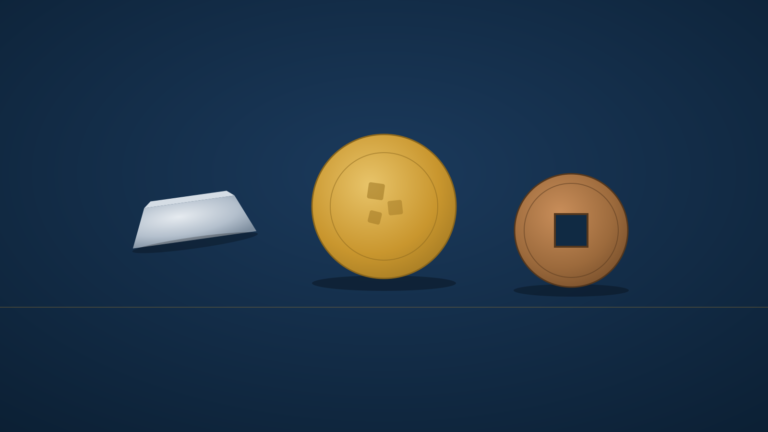
For most of modern history, the question “what is a dollar?” had a physical answer: a fixed weight of gold. Twice the world built its monetary system on that promise, and twice the promise broke. Every floating currency, every FX trade, and gold’s strange modern role are debris from those two collapses.
Tokenized Deposits vs Stablecoins: Why Banks Want a Different Digital Dollar
In 2025, the largest bank in the United States put a dollar token on a public blockchain — and the first thing it did was insist the token was not a stablecoin. It was right, and the difference is worth more than the entire stablecoin market. This is the story of the digital dollar the banks actually want.
When the Number Drops: How Markets Really Trade Economic Data
The most expensive second in finance arrives on a schedule. Everyone knows the number is coming; nobody knows what it says. What happens next — who is still quoting, who quietly stepped back, and which clients see which prices — is one of the clearest windows into how the currency market actually works.
Reading Economic Data: NFP, CPI, and Rate Decisions
Eight-thirty on the first Friday of the month is the closest thing the currency market has to an appointment. This guide explains the three scheduled events that move markets most — nonfarm payrolls, CPI, and central bank rate decisions — and how professionals actually read them: against expectations, not in isolation.
Toxic Flow: Why Your Broker Cares Who You Are
Two customers send the same order to the same dealer at the same moment. One is filled instantly at a tight price; the other gets a wider quote, or a rejection. Nothing about the orders differs — the difference is who sent them. This is a tour of toxic flow: what market makers mean by it, the machinery they use to detect it, and why the way you trade decides the price you see.
FX Instruments: The Complete Map — Spot, Forwards, Swaps, Options, Futures
People talk about “trading currencies” as if it were one activity. It is at least seven. Spot, forwards, FX swaps, currency swaps, options, futures and NDFs are different contracts with different rules about when money moves and whether you are obliged to go through with it — and the biggest of them is the one almost nobody outside the industry has heard of. Here is the whole map.
What Drives the Gold Price? Real Rates, the Dollar, and Fear
Gold earns nothing, promises nothing, and does nothing — and in 2025 it set 53 record highs. Understanding why means looking past the headlines to three forces: the real return on cash, the value of the dollar, and the price of fear. Here’s how each one actually works, and why the old rulebook has started to bend.
Private Dollars: What Stablecoins Mean for the Monetary System
In March 2023, the largest regulated dollar stablecoin got its peg back only because the US government rescued a bank. That is the whole argument in miniature: private digital dollars, leaning on public money. Here is what stablecoins do to the monetary system — and why Washington, Brussels, and everyone else want opposite things from them.
Understanding FX Spreads: What the Bank Doesn’t Tell You
Every currency price has two numbers, and the gap between them is where the money is made. This is a plain-English tour of the FX spread — what it is, what it actually costs you in dollars, why your spread is not the same as the next customer’s, and the things a dealer is under no obligation to tell you.
A Brief History of Money: From Cowrie Shells to Crypto
Money did not appear fully formed. It evolved over thousands of years as societies searched for better ways to store and transfer value — and every form it has taken, from cowrie shells to cryptocurrency, is a chapter in the same long story about what humans are willing to trust. Here is that story, briefly told.
Gold and Precious Metals: Why They Still Matter
Every other form of money that existed 5,000 years ago is gone. Gold is still here — still traded around the clock, still stacked in central bank vaults, still the asset people reach for when trust in everything else wavers. This is the story of why precious metals endure, and how their markets actually work.
What Is Cryptocurrency? (And How It Relates to Money)
In January 2009, a new kind of money quietly switched on — one issued by no government and run by no bank. Seventeen years later, cryptocurrencies are a roughly $2 trillion asset class that most people have heard of and few can explain. Here is what crypto actually is, how it works, and how it fits into the long story of money.
What Is the FX Market and Why Does It Matter?
The world’s biggest market has no building, no opening bell, and no closing price on the evening news. Yet the foreign exchange market turns over $9.6 trillion every day and sets the price of every dollar, euro, and yen that crosses a border. Here is how it works — and why it touches your life more often than you think.
What Is an FX Swap? The Biggest Instrument in the Biggest Market
The most heavily traded instrument in the world’s biggest financial market is one most people have never heard of. It is not a stock, a bond, or bitcoin. It is not even the spot currency trade we followed in What is Spot? It is the FX swap — roughly $4 trillion changing hands every day, about 42% of all foreign exchange turnover (BIS, April 2025).
The FX Market: Interbank, Prime Brokers, ECNs and ‘Last Look’
The FX market isn’t one pool but a layered hierarchy: a thin wholesale core of tier-1 banks and non-bank market makers sets the reference price, while everyone else reaches it through prime brokers, prime-of-prime providers, and ECNs. Here’s how the layers fit together — and what “last look” really means.